Unlocking Multi-Venue Secondary Markets: GRADE Releases Its Issuer-Venue Eligibility Passport Framework
Executive Summary
Market Context
The tokenization of real‑world assets has achieved meaningful scale in primary issuance, yet secondarymarket development remains constrained by operating model fragmentation. Multi‑venue andcross‑jurisdiction listings require bespoke legal, technical, and operational integration for everyissuer‑venue pairing– a process that is manual, repetitive, and commercially unsustainable at scale. Theresult: tokenized assets often remain trapped within the venue of their initial distribution, limiting liquidity,constraining investor access, and undermining the cost‑of‑capital benefits that secondary markets aredesigned to deliver.
Why This Persists
The underlying cause is structural. Tokenized RWA operating models differ materially in how ownership isrecorded, how transfers are settled, and how compliance obligations are distributed across issuers,venues, custodians, and financial intermediaries. Without a shared framework for assessing compatibility,each integration starts from scratch– duplicating issuer-venue due diligence, extending timelines, andproducing outcomes that do not transfer to the next venue pairing.
What This Paper Introduces
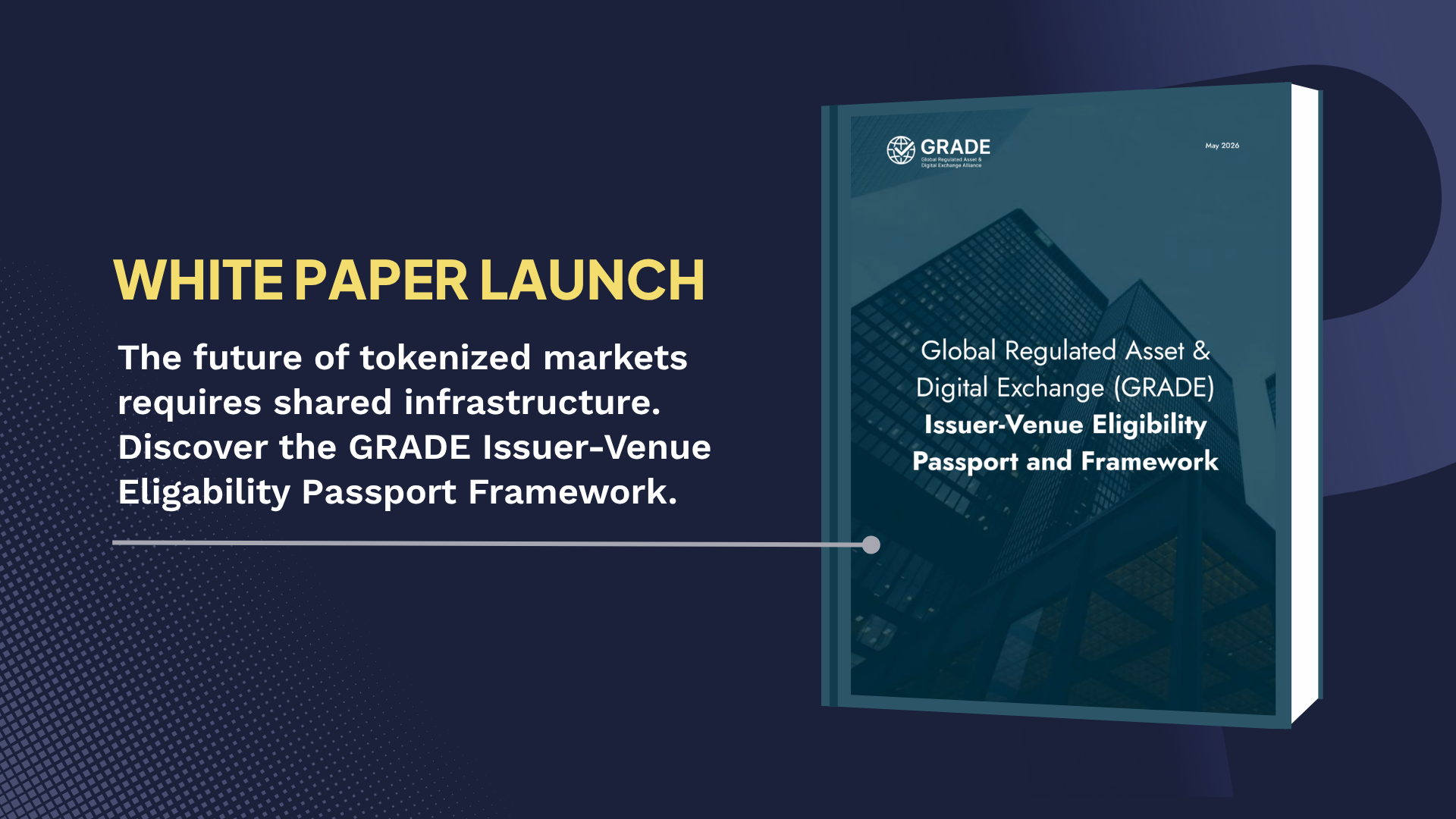
This paper introduces the GRADE Issuer‑Venue Eligibility Passport(“Passport”), a standardized assessment record: a structured, repeatableframework for evaluating issuer‑venue compatibility across legal, technical,operational dimensions. The Passport establishes a common evidence setthat issuers prepare once and venues assess consistently– replacingbilateral discovery with multilateral eligibility. The “Passport” is adocumentary tool for information-sharing purposes only. It does notconstitute, and should not be interpreted as, any legal, regulatory, orsupervisory approval, authorization, certification, or passporting right inany jurisdiction.
The paper is structured as follows: Section 1 and Section 2 map the key operating model dimensions thatdrive eligibility (tokenized RWA models and venue models, respectively). Section 3 defines the Passportmechanics–what is submitted, how compatibility is assessed, and what outputs the process produces. Anillustrative use case walking through a current‑state versus future‑state listing workflow is provided toground the framework in practice.
{{button}}
About GRADE
The Global Regulated Asset & Digital Exchange Alliance (GRADE) is an invite-only coalition of regulatedtrading venues, custodians, and institutional market participants. Its members operate tokenized financialproducts across multiple jurisdictions and are collectively focused on reducing the operational and legalfriction that constrains multi‑venue secondary market development. GRADE provides a knowledge platformof shared frameworks, common taxonomies, and practitioner‑led standards development – required toscale multi‑venue secondary markets. More information can be found at www.gradealliance.xyz.
About Particula
Particula is the prime rating provider for digital assets, transforming on- and off-chain data into actionable insights. The company delivers next-generation risk ratings and comprehensive analyses, across issuer and counterparties, issuance structure, technical implementation and underlying risk – providing the clarity and confidence needed to navigate the complexities of digital finance.

Latest News & Insights
Project Harmonia opens for applications: the RFP is live
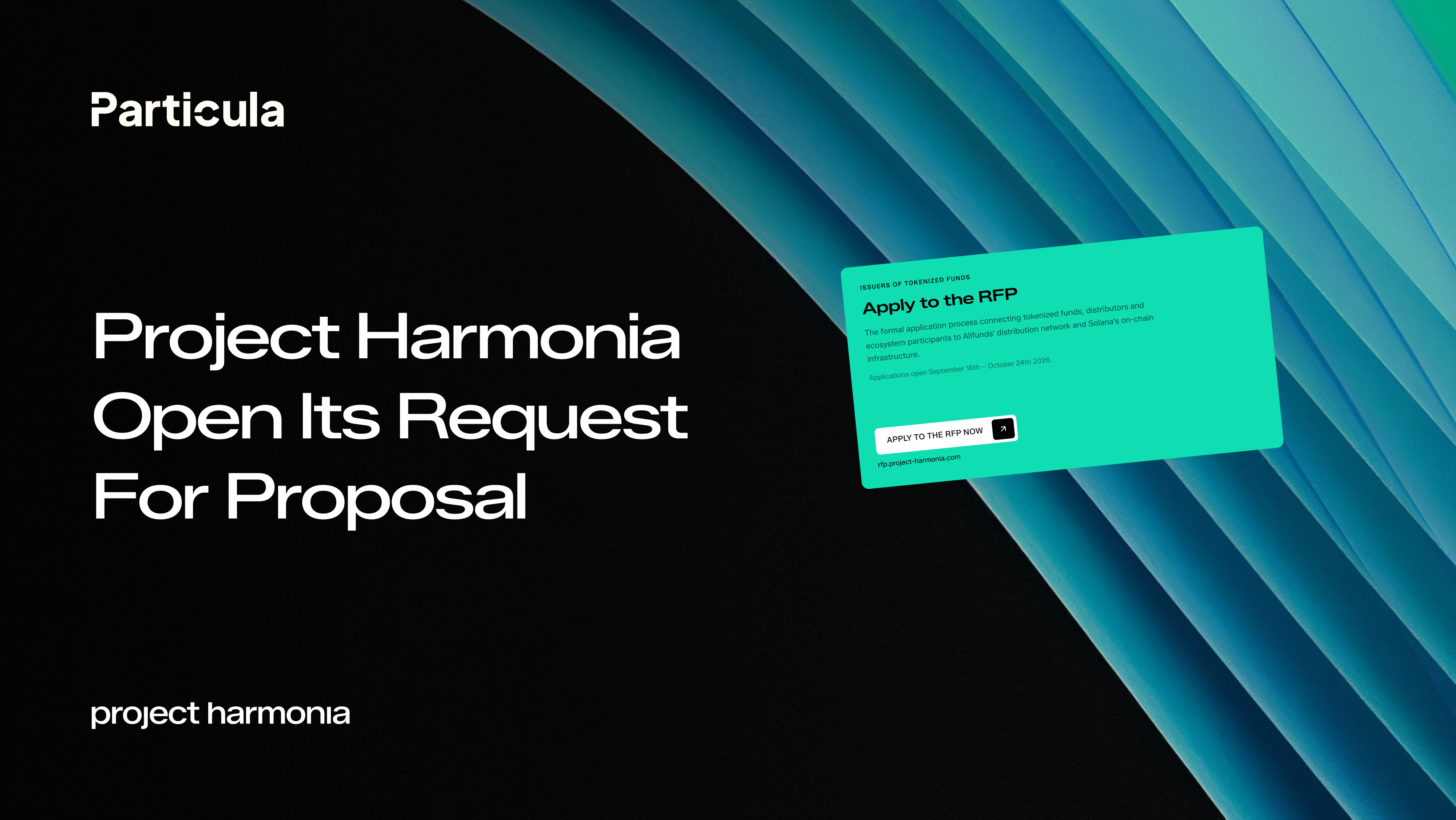
Today, September 17, 2026, Project Harmonia opens its Request for Proposals. Issuers, distributors and ecosystem participants can now register and apply for admission to a program connecting Allfunds' institutional distribution network with Solana's on-chain infrastructure.